Reaction is a reflex, but response is a choice
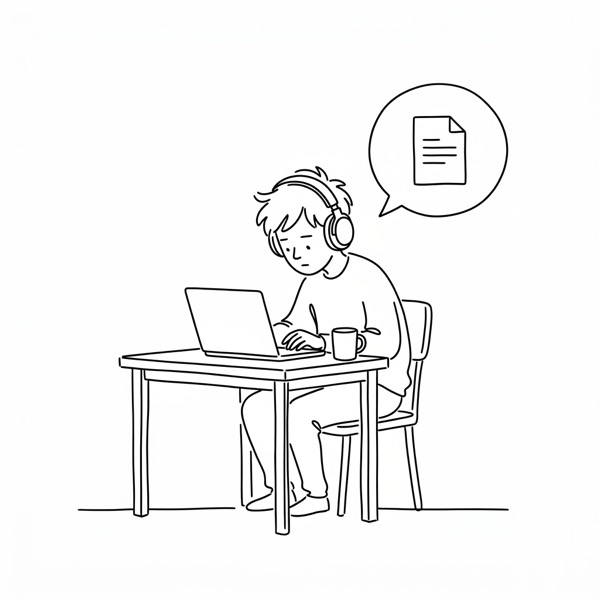
Most teams operate in a state of constant reaction. A notification appears, a message pings, and the brain treats it as a prompt for immediate action. We stop mid-thought, reply with whatever is at the top of our minds, and then spend fifteen minutes trying to remember where we were in the work that actually mattered.
This is reaction, and it is the enemy of calm.
Response is different. Response is deliberate. It is what happens when you decide when to check communications, process the information, and provide a thoughtful reply. But you can only move from reaction to response if you have a shared agreement on how long a response should take.
Without an explicit Internal SLA (Service Level Agreement), the fastest replier sets the implied standard. If one person replies in 30 seconds, everyone else feels like they are failing if they take thirty minutes. The result is a team that is always "on," but rarely focused.
The anxiety of the unknown
The reason we obsessively check Slack or email is not because we love the tool. It is because we are afraid of being the bottleneck.
When the rules are unwritten, we assume the worst. We assume that if we don't reply immediately, someone will get stuck, a customer will be unhappy, or a lead will think we aren't working. This ambient anxiety is what keeps teams trapped in Pseudo-Async Culture.
Setting an Internal SLA replaces this anxiety with certainty. It gives teammates the permission to close their tabs, turn off notifications, and stay in a state of flow for hours at a time, knowing exactly what they are expected to see and when.
A tiered SLA framework for small teams
You don't need a complex legal document. You need three or four tiers of expectations that everyone on the team understands.
Tier 1: Emergency (Flash)
- What it is: Production outages, critical customer fires, or safety issues.
- Channel: Phone call, SMS, or a specific "Emergency" Slack channel.
- Expectation: Immediate attention (within 15–30 minutes).
Tier 2: Active Collaboration (Focus)
- What it is: Questions needed for ongoing work, blockers, or quick decisions.
- Channel: Standard Slack/Discord channels or threads.
- Expectation: Within 4–8 hours (or twice per day).
Tier 3: Thoughtful Review (Deep)
- What it is: Proposal reviews, project briefs, design feedback, or documentation.
- Channel: Notion, Linear, GitHub, or shared documents.
- Expectation: Within 24–48 hours.
How to move from Reaction to Response
1. Change your status, not your speed
Use Slack status to signal focus. "Focusing until 2 PM" is much more helpful than just being "Away." It tells the team exactly when you will be back in "Response" mode.
2. Batch your check-ins
Check your communication tools at specific times (e.g., 9 AM, 1 PM, and 4:30 PM). Between these times, close the apps. The world rarely ends in four hours, and if it does, the team should use Tier 1.
3. Celebrate the "Slow" reply
When a lead takes four hours to reply with a thoughtful, context-rich message rather than thirty seconds with a "K," they are modeling the culture. High-performance teams value the quality of the answer over the speed of the ping.
The operating rule
You owe your team a thoughtful response, but you do not owe them your immediate attention.
A checklist for setting your team's SLA
- Have we defined what actually constitutes an "Emergency"?
- Is it culturally acceptable to be "offline" for 4 hours of focused work?
- Are managers leading by example (i.e., not responding instantly to everything)?
- Do we distinguish between "Chat" (quick) and "Documents" (deep) review times?
How internal SLAs quietly fail
The most common failure is the "Slack leaking" mode where managers agree to the SLA but keep sending direct messages with "Quick question?" several times a day. Every "quick question" is a Tier 1 intrusion in a Tier 2 wrapper.
Another failure is treating the SLA as a maximum instead of an expectation. If the SLA is 8 hours, it's fine to reply in 1 hour if you happen to be free, but doing so consistently can inadvertently recreate the "instant reply" pressure.
Response generates calm, reaction generates chaos
Reaction is an interruption machine. It makes small teams feel busy but productive in name only. Response is an operating system. It allows the same size team to produce significantly higher output because their attention is treated as the team's most valuable asset.
Agree on the tiers, set the expectations, and turn off the notifications. Your team doesn't need you to be faster; they need you to be focused.